Proofs of the mathematical result that the rational number ⁠22/7⁠ is greater than π (pi) date back to antiquity. One of these proofs, more recently developed but requiring only elementary techniques from calculus, has attracted attention in modern mathematics due to its mathematical elegance and its connections to the theory of Diophantine approximations. Stephen Lucas calls this proof "one of the more beautiful results related to approximating π". Julian Havil ends a discussion of continued fraction approximations of π with the result, describing it as "impossible to resist mentioning" in that context.

The purpose of the proof is not primarily to convince its readers that ⁠22/7⁠ (or ⁠3 1/7⁠) is indeed bigger than π. Systematic methods of computing the value of π exist. If one knows that π is approximately 3.14159, then it trivially follows that π < ⁠22/7⁠, which is approximately 3.142857. But it takes much less work to show that π < ⁠22/7⁠ by the method used in this proof than to show that π is approximately 3.14159.

Background

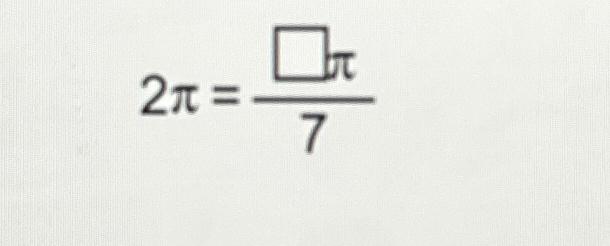
⁠22/7⁠ is a widely used Diophantine approximation of π. It is a convergent in the simple continued fraction expansion of π. It is greater than π, as can be readily seen in the decimal expansions of these values:

22 7 = 3. 142 857 ¯ , π = 3.141 592 65 {\displaystyle {\begin{aligned}{\frac {22}{7}}&=3.{\overline {142\,857}},\\\pi \,&=3.141\,592\,65\ldots \end{aligned}}}

The approximation has been known since antiquity. Archimedes wrote the first known proof that ⁠22/7⁠ is an overestimate in the 3rd century BCE, although he may not have been the first to use that approximation. His proof proceeds by showing that ⁠22/7⁠ is greater than the ratio of the perimeter of a regular polygon with 96 sides to the diameter of a circle it circumscribes.

Proof

The proof first devised by British electrical engineer Donald Percy Dalzell (1898–1988) in 1944 can be expressed very succinctly:

0 < 0 1 x 4 ( 1 x ) 4 1 x 2 d x = 22 7 π . {\displaystyle 0<\int _{0}^{1}{\frac {x^{4}\left(1-x\right)^{4}}{1 x^{2}}}\,dx={\frac {22}{7}}-\pi .}

Therefore, ⁠22/7⁠ > π.

The evaluation of this integral was the first problem in the 1968 Putnam Competition. It is easier than most Putnam Competition problems, but the competition often features seemingly obscure problems that turn out to refer to something very familiar. This integral has also been used in the entrance examinations for the Indian Institutes of Technology.

Details of evaluation of the integral

That the integral is positive follows from the fact that the integrand is non-negative; the denominator is positive and the numerator is a product of nonnegative numbers. One can also easily check that the integrand is strictly positive for at least one point in the range of integration, say at ⁠1/2⁠. Since the integrand is continuous at that point and nonnegative elsewhere, the integral from 0 to 1 must be strictly positive.

It remains to show that the integral in fact evaluates to the desired quantity:

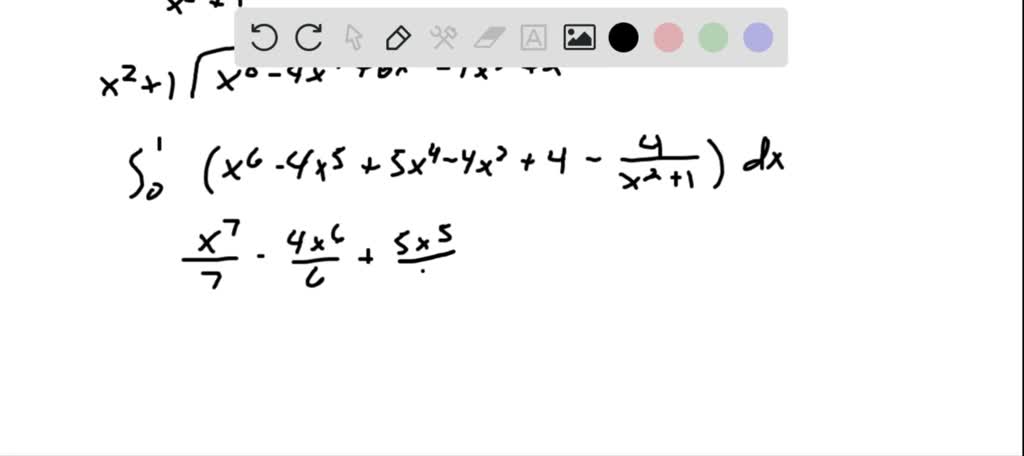
0 < 0 1 x 4 ( 1 x ) 4 1 x 2 d x = 0 1 x 4 4 x 5 6 x 6 4 x 7 x 8 1 x 2 d x expansion of terms in the numerator = 0 1 ( x 6 4 x 5 5 x 4 4 x 2 4 4 1 x 2 ) d x  using polynomial long division = ( x 7 7 2 x 6 3 x 5 4 x 3 3 4 x 4 arctan x ) | 0 1 definite integration = 1 7 2 3 1 4 3 4 π with  arctan ( 1 ) = π 4  and  arctan ( 0 ) = 0 = 22 7 π . addition {\displaystyle {\begin{aligned}0&<\int _{0}^{1}{\frac {x^{4}\left(1-x\right)^{4}}{1 x^{2}}}\,dx\\[8pt]&=\int _{0}^{1}{\frac {x^{4}-4x^{5} 6x^{6}-4x^{7} x^{8}}{1 x^{2}}}\,dx&{\text{expansion of terms in the numerator}}\\[8pt]&=\int _{0}^{1}\left(x^{6}-4x^{5} 5x^{4}-4x^{2} 4-{\frac {4}{1 x^{2}}}\right)\,dx&{\text{ using polynomial long division}}&\\[8pt]&=\left.\left({\frac {x^{7}}{7}}-{\frac {2x^{6}}{3}} x^{5}-{\frac {4x^{3}}{3}} 4x-4\arctan {x}\right)\,\right|_{0}^{1}&{\text{definite integration}}\\[6pt]&={\frac {1}{7}}-{\frac {2}{3}} 1-{\frac {4}{3}} 4-\pi \quad &{\text{with }}\arctan(1)={\frac {\pi }{4}}{\text{ and }}\arctan(0)=0\\[8pt]&={\frac {22}{7}}-\pi .&{\text{addition}}\end{aligned}}}

(See polynomial long division.)

Quick upper and lower bounds

In Dalzell (1944), it is pointed out that if 1 is substituted for x in the denominator, one gets a lower bound on the integral, and if 0 is substituted for x in the denominator, one gets an upper bound:

1 1260 = 0 1 x 4 ( 1 x ) 4 2 d x < 0 1 x 4 ( 1 x ) 4 1 x 2 d x < 0 1 x 4 ( 1 x ) 4 1 d x = 1 630 . {\displaystyle {\frac {1}{1260}}=\int _{0}^{1}{\frac {x^{4}\left(1-x\right)^{4}}{2}}\,dx<\int _{0}^{1}{\frac {x^{4}\left(1-x\right)^{4}}{1 x^{2}}}\,dx<\int _{0}^{1}{\frac {x^{4}\left(1-x\right)^{4}}{1}}\,dx={1 \over 630}.}

Thus we have

22 7 1 630 < π < 22 7 1 1260 , {\displaystyle {\frac {22}{7}}-{\frac {1}{630}}<\pi <{\frac {22}{7}}-{\frac {1}{1260}},}

hence 3.1412 < π < 3.1421 in decimal expansion. The bounds deviate by less than 0.015% from π. See also Dalzell (1971).

Proof that 355/113 exceeds π

As discussed in Lucas (2005), the well-known Diophantine approximation and far better upper estimate ⁠355/113⁠ for π follows from the relation

0 < 0 1 x 8 ( 1 x ) 8 ( 25 816 x 2 ) 3164 ( 1 x 2 ) d x = 355 113 π . {\displaystyle 0<\int _{0}^{1}{\frac {x^{8}\left(1-x\right)^{8}\left(25 816x^{2}\right)}{3164\left(1 x^{2}\right)}}\,dx={\frac {355}{113}}-\pi .}
355 113 = 3.141 592 92 , {\displaystyle {\frac {355}{113}}=3.141\,592\,92\ldots ,}

where the first six digits after the decimal point agree with those of π. Substituting 1 for x in the denominator, we get the lower bound

0 1 x 8 ( 1 x ) 8 ( 25 816 x 2 ) 6328 d x = 911 5 261 111 856 = 0.000 000 173 , {\displaystyle \int _{0}^{1}{\frac {x^{8}\left(1-x\right)^{8}\left(25 816x^{2}\right)}{6328}}\,dx={\frac {911}{5\,261\,111\,856}}=0.000\,000\,173\ldots ,}

substituting 0 for x in the denominator, we get twice this value as an upper bound, hence

355 113 911 2 630 555 928 < π < 355 113 911 5 261 111 856 . {\displaystyle {\frac {355}{113}}-{\frac {911}{2\,630\,555\,928}}<\pi <{\frac {355}{113}}-{\frac {911}{5\,261\,111\,856}}\,.}

In decimal expansion, this means 3.141592 57 < π < 3.141592 74, where the bold digits of the lower and upper bound are those of π.

Extensions

The above ideas can be generalized to get better approximations of π; see also Backhouse (1995) and Lucas (2005) (in both references, however, no calculations are given). For explicit calculations, consider, for every integer n ≥ 1,

1 2 2 n 1 0 1 x 4 n ( 1 x ) 4 n d x < 1 2 2 n 2 0 1 x 4 n ( 1 x ) 4 n 1 x 2 d x < 1 2 2 n 2 0 1 x 4 n ( 1 x ) 4 n d x , {\displaystyle {\frac {1}{2^{2n-1}}}\int _{0}^{1}x^{4n}(1-x)^{4n}\,dx<{\frac {1}{2^{2n-2}}}\int _{0}^{1}{\frac {x^{4n}(1-x)^{4n}}{1 x^{2}}}\,dx<{\frac {1}{2^{2n-2}}}\int _{0}^{1}x^{4n}(1-x)^{4n}\,dx,}

where the middle integral evaluates to

1 2 2 n 2 0 1 x 4 n ( 1 x ) 4 n 1 x 2 d x = j = 0 2 n 1 ( 1 ) j 2 2 n j 2 ( 8 n j 1 ) ( 8 n j 2 4 n j ) ( 1 ) n ( π 4 j = 0 3 n 1 ( 1 ) j 2 j 1 ) {\displaystyle {\begin{aligned}{\frac {1}{2^{2n-2}}}&\int _{0}^{1}{\frac {x^{4n}(1-x)^{4n}}{1 x^{2}}}\,dx\\[6pt]={}&\sum _{j=0}^{2n-1}{\frac {(-1)^{j}}{2^{2n-j-2}(8n-j-1){\binom {8n-j-2}{4n j}}}} (-1)^{n}\left(\pi -4\sum _{j=0}^{3n-1}{\frac {(-1)^{j}}{2j 1}}\right)\end{aligned}}}

involving π. The last sum also appears in Leibniz' formula for π. The correction term and error bound is given by

1 2 2 n 1 0 1 x 4 n ( 1 x ) 4 n d x = 1 2 2 n 1 ( 8 n 1 ) ( 8 n 4 n ) π n 2 10 n 2 ( 8 n 1 ) , {\displaystyle {\begin{aligned}{\frac {1}{2^{2n-1}}}\int _{0}^{1}x^{4n}(1-x)^{4n}\,dx&={\frac {1}{2^{2n-1}(8n 1){\binom {8n}{4n}}}}\\[6pt]&\sim {\frac {\sqrt {\pi n}}{2^{10n-2}(8n 1)}},\end{aligned}}}

where the approximation (the tilde means that the quotient of both sides tends to one for large n) of the central binomial coefficient follows from Stirling's formula and shows the fast convergence of the integrals to π.

Calculation of these integrals: For all integers k ≥ 0 and ≥ 2 we have

x k ( 1 x ) = ( 1 2 x x 2 ) x k ( 1 x ) 2 = ( 1 x 2 ) x k ( 1 x ) 2 2 x k 1 ( 1 x ) 2 . {\displaystyle {\begin{aligned}x^{k}(1-x)^{\ell }&=(1-2x x^{2})x^{k}(1-x)^{\ell -2}\\[6pt]&=(1 x^{2})\,x^{k}(1-x)^{\ell -2}-2x^{k 1}(1-x)^{\ell -2}.\end{aligned}}}

Applying this formula recursively 2n times yields

x 4 n ( 1 x ) 4 n = ( 1 x 2 ) j = 0 2 n 1 ( 2 ) j x 4 n j ( 1 x ) 4 n 2 ( j 1 ) ( 2 ) 2 n x 6 n . {\displaystyle x^{4n}(1-x)^{4n}=\left(1 x^{2}\right)\sum _{j=0}^{2n-1}(-2)^{j}x^{4n j}(1-x)^{4n-2(j 1)} (-2)^{2n}x^{6n}.}

Furthermore,

x 6 n ( 1 ) 3 n = j = 1 3 n ( 1 ) 3 n j x 2 j j = 0 3 n 1 ( 1 ) 3 n j x 2 j = j = 0 3 n 1 ( ( 1 ) 3 n ( j 1 ) x 2 ( j 1 ) ( 1 ) 3 n j x 2 j ) = ( 1 x 2 ) j = 0 3 n 1 ( 1 ) 3 n j x 2 j , {\displaystyle {\begin{aligned}x^{6n}-(-1)^{3n}&=\sum _{j=1}^{3n}(-1)^{3n-j}x^{2j}-\sum _{j=0}^{3n-1}(-1)^{3n-j}x^{2j}\\[6pt]&=\sum _{j=0}^{3n-1}\left((-1)^{3n-(j 1)}x^{2(j 1)}-(-1)^{3n-j}x^{2j}\right)\\[6pt]&=-(1 x^{2})\sum _{j=0}^{3n-1}(-1)^{3n-j}x^{2j},\end{aligned}}}

where the first equality holds, because the terms for 1 ≤ j ≤ 3n – 1 cancel, and the second equality arises from the index shift jj 1 in the first sum.

Application of these two results gives

x 4 n ( 1 x ) 4 n 2 2 n 2 ( 1 x 2 ) = j = 0 2 n 1 ( 1 ) j 2 2 n j 2 x 4 n j ( 1 x ) 4 n 2 j 2 4 j = 0 3 n 1 ( 1 ) 3 n j x 2 j ( 1 ) 3 n 4 1 x 2 . ( 1 ) {\displaystyle {\begin{aligned}{\frac {x^{4n}(1-x)^{4n}}{2^{2n-2}(1 x^{2})}}=\sum _{j=0}^{2n-1}&{\frac {(-1)^{j}}{2^{2n-j-2}}}x^{4n j}(1-x)^{4n-2j-2}\\[6pt]&{}-4\sum _{j=0}^{3n-1}(-1)^{3n-j}x^{2j} (-1)^{3n}{\frac {4}{1 x^{2}}}.\qquad (1)\end{aligned}}}

For integers k, ≥ 0, using integration by parts times, we obtain

0 1 x k ( 1 x ) d x = k 1 0 1 x k 1 ( 1 x ) 1 d x = k 1 1 k 2 1 k 0 1 x k d x = 1 ( k 1 ) ( k k ) . ( 2 ) {\displaystyle {\begin{aligned}\int _{0}^{1}x^{k}(1-x)^{\ell }\,dx&={\frac {\ell }{k 1}}\int _{0}^{1}x^{k 1}(1-x)^{\ell -1}\,dx\\[6pt]&\,\,\,\vdots \\[6pt]&={\frac {\ell }{k 1}}{\frac {\ell -1}{k 2}}\cdots {\frac {1}{k \ell }}\int _{0}^{1}x^{k \ell }\,dx\\[6pt]&={\frac {1}{(k \ell 1){\binom {k \ell }{k}}}}.\qquad (2)\end{aligned}}}

Setting k = = 4n, we obtain

0 1 x 4 n ( 1 x ) 4 n d x = 1 ( 8 n 1 ) ( 8 n 4 n ) . {\displaystyle \int _{0}^{1}x^{4n}(1-x)^{4n}\,dx={\frac {1}{(8n 1){\binom {8n}{4n}}}}.}

Integrating equation (1) from 0 to 1 using equation (2) and arctan(1) = ⁠π/4⁠, we get the claimed equation involving π.

The results for n = 1 are given above. For n = 2 we get

1 4 0 1 x 8 ( 1 x ) 8 1 x 2 d x = π 47 171 15 015 {\displaystyle {\frac {1}{4}}\int _{0}^{1}{\frac {x^{8}(1-x)^{8}}{1 x^{2}}}\,dx=\pi -{\frac {47\,171}{15\,015}}}

and

1 8 0 1 x 8 ( 1 x ) 8 d x = 1 1 750 320 , {\displaystyle {\frac {1}{8}}\int _{0}^{1}x^{8}(1-x)^{8}\,dx={\frac {1}{1\,750\,320}},}

hence 3.141592 31 < π < 3.141592 89, where the bold digits of the lower and upper bound are those of π. Similarly for n = 3,

1 16 0 1 x 12 ( 1 x ) 12 1 x 2 d x = 431 302 721 137 287 920 π {\displaystyle {\frac {1}{16}}\int _{0}^{1}{\frac {x^{12}\left(1-x\right)^{12}}{1 x^{2}}}\,dx={\frac {431\,302\,721}{137\,287\,920}}-\pi }

with correction term and error bound

1 32 0 1 x 12 ( 1 x ) 12 d x = 1 2 163 324 800 , {\displaystyle {\frac {1}{32}}\int _{0}^{1}x^{12}(1-x)^{12}\,dx={\frac {1}{2\,163\,324\,800}},}

hence 3.141592653 40 < π < 3.141592653 87. The next step for n = 4 is

1 64 0 1 x 16 ( 1 x ) 16 1 x 2 d x = π 741 269 838 109 235 953 517 800 {\displaystyle {\frac {1}{64}}\int _{0}^{1}{\frac {x^{16}(1-x)^{16}}{1 x^{2}}}\,dx=\pi -{\frac {741\,269\,838\,109}{235\,953\,517\,800}}}

with

1 128 0 1 x 16 ( 1 x ) 16 d x = 1 2 538 963 567 360 , {\displaystyle {\frac {1}{128}}\int _{0}^{1}x^{16}(1-x)^{16}\,dx={\frac {1}{2\,538\,963\,567\,360}},}

which gives 3.141592653589 55 < π < 3.141592653589 96.

See also

  • Approximations of π
  • Chronology of computation of π
  • Lindemann–Weierstrass theorem (proof that π is transcendental)
  • List of topics related to π
  • Proof that π is irrational

Footnotes

Notes

Citations

External links

  • The problems of the 1968 Putnam competition, with this proof listed as question A1.

22/7>π proof using integration Teaching Resources

Solved 2π= π7

SOLVED\pi

Is π = 22/7 ? maths mathhacks mathstricks educationviral education

(PDF) ARCHIMEDES Pi (22/7), WORLD Pi (3.14159265358....) AND REDDY Pi